
*
Digital Storytelling / Story Circle / Reflection / Resources
Digital Storytelling

For eons, humans have gathered around a fire, sharing stories.
Digital Storytelling is a method of telling personal stories using digital tools. These are typically stories of personal relevance — transcendence, transformation, change, of events or people in our lives who have made a difference.
Rather than the goal of commercial, corporate media to sell audiences to advertisers, the focus is on hearing the stories of everyday people, the communities in which we live, and the people with whom we share the planet. The belief is that there is empowerment in hearing the stories, as well as empowerment in the telling of the stories. Digital technologies are tools to aid in this ancient human practice of storytelling.
Primarily initiated by the multimedia performance work of Dan Atchley and developed by Joe Lambert, founder of the StoryCenter.org (formerly the Center for Digital Storytelling in Berkeley, California, USA), the Digital Storytelling technique has spread across the globe. Contexts have included support in healing and prevention of domestic violence, awareness of HIV, conflict resolution and reconciliation, and self-reflexivity in the college classroom.
Digital Storytelling focuses more on the stories told, and less on the technical polish of the finished production. Simple digital tools and methods are used, drawing from archival family photographs and artifacts, with the voice of the storyteller favored over that of the polished professional announcer.
Digital Storytelling utilizes John O’Neal’s Story Circle process to help cultivate a group bond and personal growth through reflection, respectful dialogue, listening, and shared storytelling.
Within scholarly circles, there are striking similarities between the tenets of digital storytelling and notions of self-reflexivity, oral history, ethnographic methods of social science, and media as tools for building community and affecting personal/social change.
With stories rooted in the experience of the storyteller searching for personal or universal human truths, Digital Storytelling offers a unique method of cultivating practical self-reflexivity for people in a variety of personal and cultural contexts.
Personal note: I participated in my first digital storytelling workshop in 2004. It deeply – and delightfully – impacted my personal and professional lives.
The Story Circle process resonated with Freirean concepts of reflection and action I encountered as a teenager, and Freirean-informed processes of dialogue cultivated in grad school.
I’ve found the Story Circle process helpful in facilitating discussions, meetings, and the university classroom.
J Higgins
Story Circle
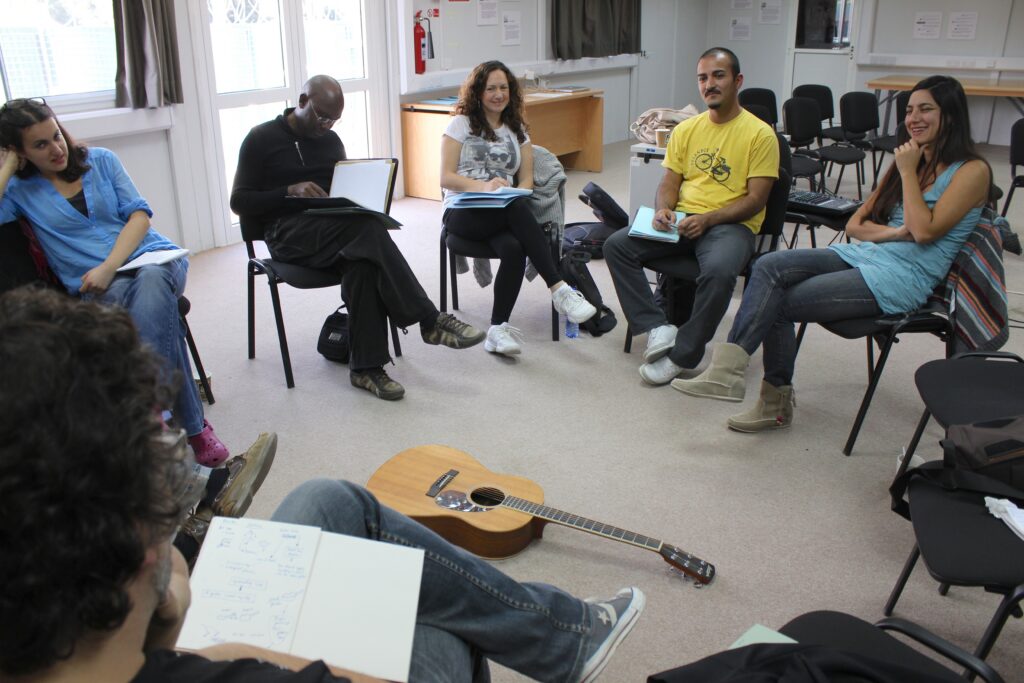
A key element in the Digital Storytelling process is the “Story Circle,” drawing from the work started during the 1960s’ Civil Rights Movement by John O’Neal and Free Southern Theater, evolving into Junebug Productions.
From JunebugProductions.org:
The rules of the story circle are the rules of civil participation in society. You agree to listen. You agree to respect. John O’Neal
“Story Circle is central to Junebug’s art-making & engagement. Junebug uses the Story Circle methodology created by our founder John O’Neal to build bridges, facilitate brave spaces, share stories, and cultivate healing.”
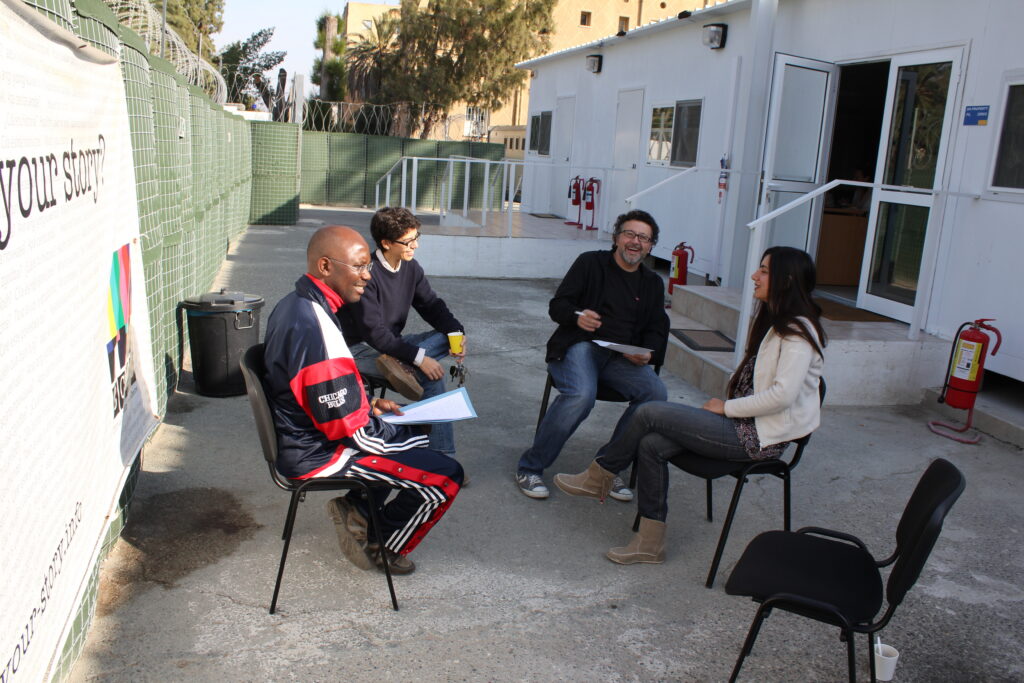
In Digital Storytelling, the Story Circle process provides a respectful, safe, encouraging, nurturing place to share your thoughts, ideas, emotions – and hear others’. “Deep listening” is cultivated.
We help each other find and develop our stories, providing and getting feedback on the meaning behind moments of change in our lives.
We are changed as we help others find their stories and discover the meanings behind our own story. The group forms a bond as the stories emerge.
The culmination of the Digital Storytelling experience is the community gathering, where we share the stories created through the process with friends and family. For people in the story circle, it’s delightfully uplifting to see where the initial story idea ultimately led the storyteller in making meaning of an event in their life.
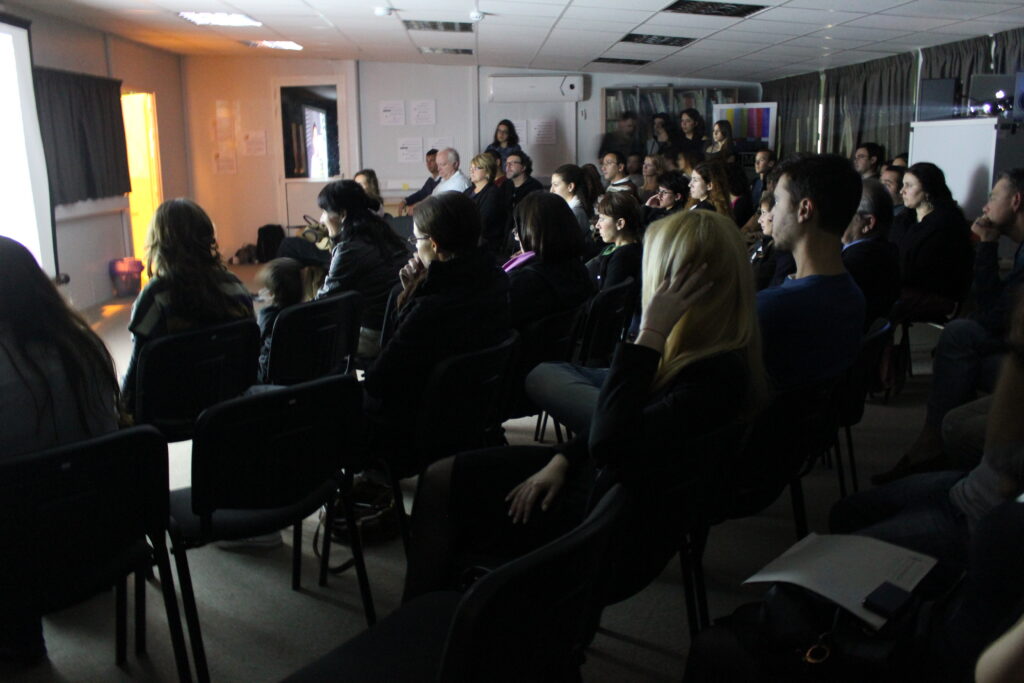
Personal note: At my first Digital Storytelling workshop in 2004, I was fascinated by how much the culmination of the storytelling process, the community gathering, resonated with me.
I was witnessing an event I’d participated in since first becoming involved in grassroots media in 1974: the community screening found at community media centers around the world.
Shared practices for building community.
J Higgins
Guided Reflection
Reflection Guide (pdf)
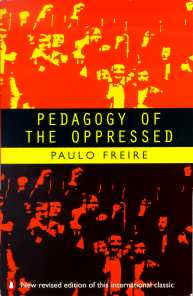
Paulo Freire was a Brazilian educator engaged in adult literacy whose seminal work, Pedagogy of the Oppressed, emerged in the late 1960s and early 1970s and has had a profound global impact on pedagogy (the process of learning and teaching). Freire is a significant source for notions of reflection and action to understand and change the social order; in particular, to improve the lives of marginalized people.
Freire described all education as political in nature, and criticized institutional schooling as oppressing students, training them to serve as objects (passive, acted upon, regurgitating information). He expanded the idea of schooling to include everyday life, and how we’re trained to respond by power groups in society.
Instead, Freire described a system where people would become subjects (actively taking charge of their life to transform the world), growing constantly through life-long learning.
To achieve this, he identified processes of dialogue (a focus on listening as well as speaking) and praxis (critical reflection and action upon the world in order to transform it).
Through praxis, a person would act, then reflect (using guided critical processes) on that action and its impact, then act again, this time informed by reflection. The ongoing process of learning and action repeat in an upward growth spiral to conscientization: a critical awareness (better understanding how power works in social and political arenas). Through praxis, we can better recognize and address injustice in our communities.
Philosopher Roland Barthes noted differences between reflection and reflexivity:
Reflexivity doesn’t mean simply to `reflect on’ (which usually comes either later or too late) but is an immediate critical consciousness of what one is doing, thinking or writing.
Personal note: I’m a reflection and Freire fanboy. It started when I was a teenager and studying in Mexico, but I didn’t become aware of how deeply it influenced my life and values until 15 years later.
Here’s an article I use to help introduce people to Freire and reflection – based on my transformative experience at age 17:
Paulo Freire and Social Transformation. Peace Review 9.4: 571-577. 1997.
J Higgins
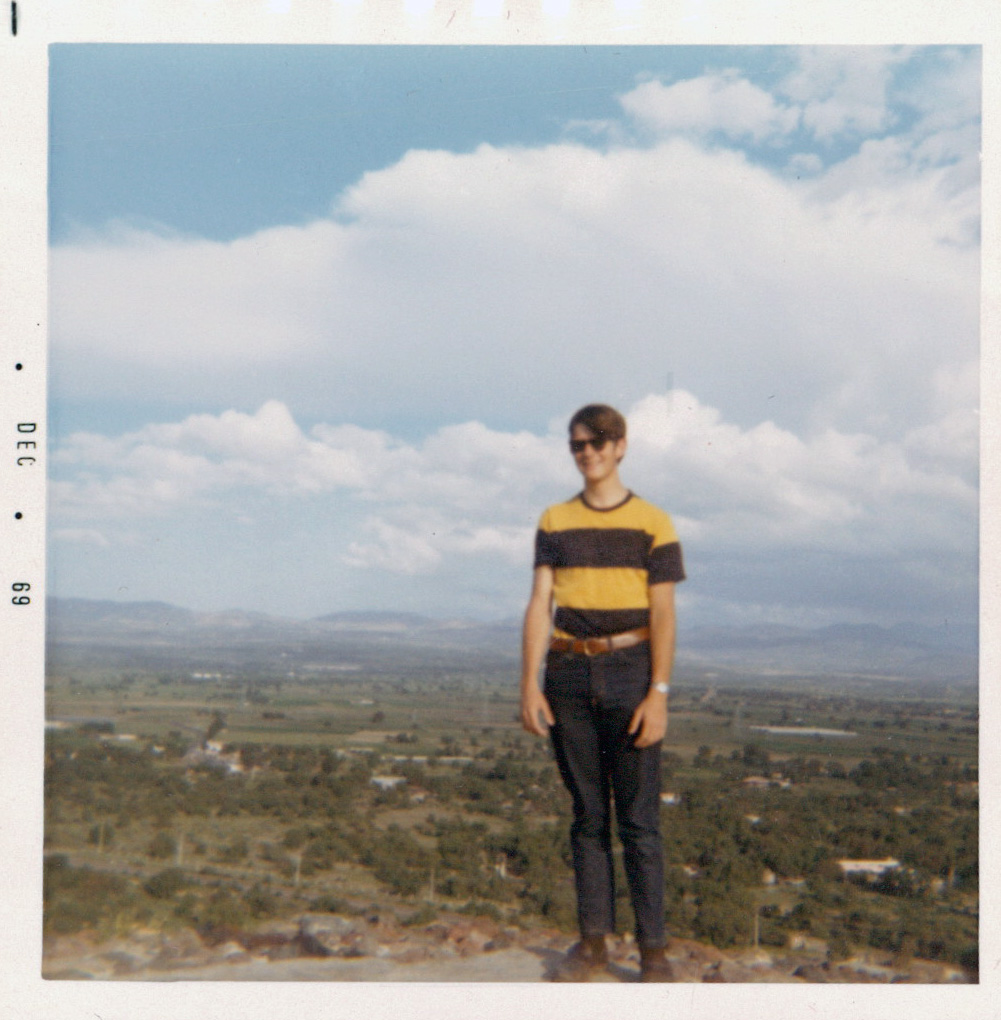
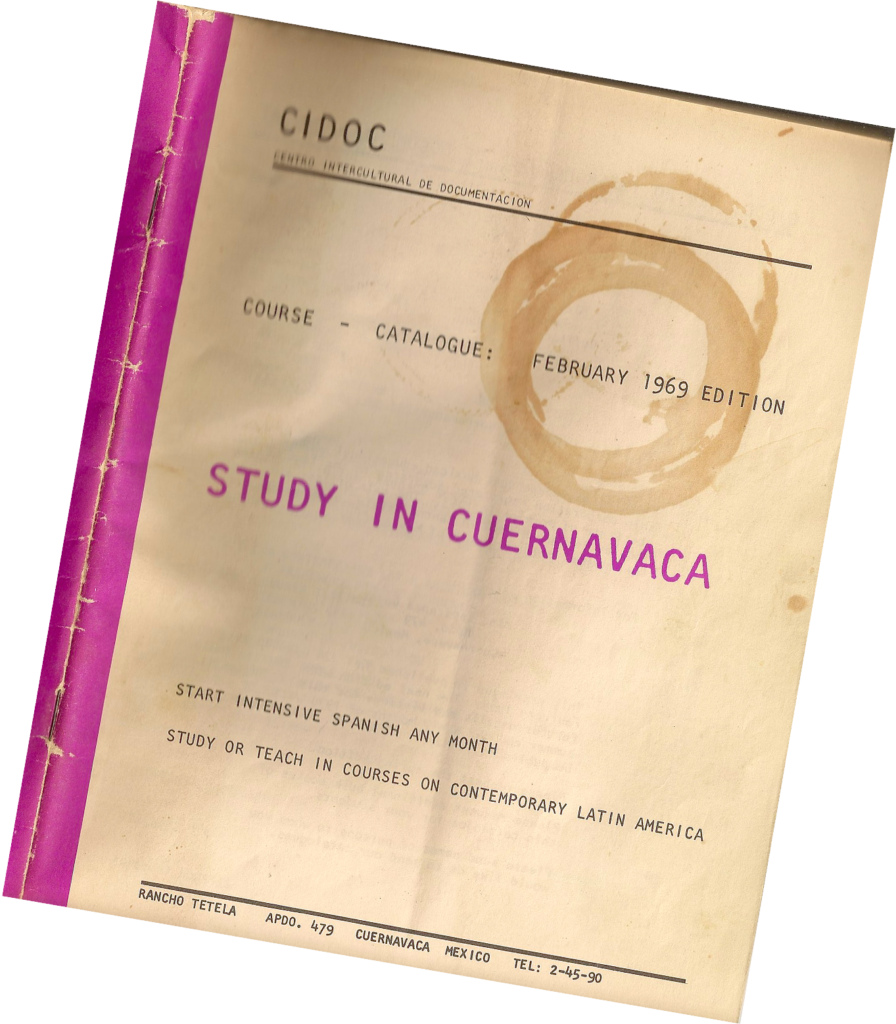
Cuernavaca Mexico, 1969
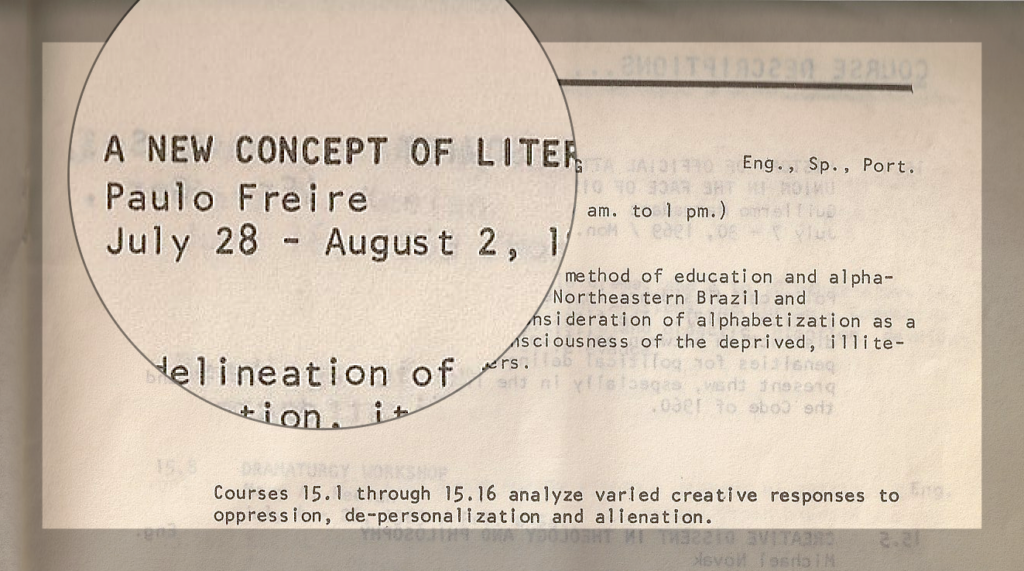
CIDOC, Cuernavaca Mexico, 1969
Resources & Story Samples
Resources
- How-To create a digital story: Free preview version of The Digital Storytelling Cookbook, by Joe Lambert and StoryCenter
- The StoryCenter.org: web site
- Digital Storytelling: Urgent Work for Urgent Times, Joe Lambert and Brooke Hessler
- The roots of the Story Circle: John O’Neal, the 1960s Civil Rights Movement, and Free Southern Theater – Junebug.org
- Story Circle facilitation and training: jesikah maria ross
- Story Circles: Deep Listening and Bridge Building on Issues That Matter
- A “How-To Guide” by jesikah for public radio stations who want to collaborate with community organizations to use stories for bridge building and understanding.
- Story Circles: Deep Listening and Bridge Building on Issues That Matter
- Higgins articles:
- Higgins, John. 2011. Peace-building Through Listening, Digital Storytelling, and Community Media in Cyprus. Global Media Journal: Mediterranean Edition 6.1.
- Higgins, John. 2014. Self-reflexivity in Oral Histories: Pedagogical Practices in Cypriot University Classrooms. Chapter in Challenging History: Oral History Work in Cyprus. Ed. Holger Briel. Nicosia: U of Nicosia Press.
- Higgins, John. 1997. Paulo Freire and Social Transformation. Peace Review 9.4: 571-577.
- Additional materials are available on Higgins’ Bio/ Projects/ Articles page.
Story Samples
- Selected examples of digital storytelling from Higgins’ workshops
- Humboldt County
Menlo College, USA: Ben created this story about growing up in Humboldt County, CA. As someone who spends a lot of time with friends in Humboldt, I can state that Ben’s story perfectly reflects the culture. - Spirals
Cyprus. Maria uses this video in her work with at-risk youth in old town Nicosia, to show them you often can accomplish big things if you aren’t aware they can’t be done.
Also, the idea of oldsters moving over to make room for newcomers to the project is a helpful reminder. - Don’t Tell Mama
Cyprus. Short, fun story by Artug. I love the image of him in the red glasses. - The Big Question of My Life
Cyprus. The story prompt was about a significant location/place, or artifact.
Zehra immediately knew the story she just had to tell. I love the video of her grandmother she recorded during the workshop – reacting like so many grandmothers everywhere. - Additional Curated Samples of Digital Storytelling – Higgins’ YouTube StoryFires channel
- Higgins Projects:
- Cyprus Stories: Stories from across the island. University students, middle school students, civil society workshop participants at the Cyprus Community Media Centre.
- MenloTV: Menlo College students
- StoryFires: Univ of San Francisco students
- Higgins’ digital stories: YouTube
- The StoryCenter: YouTube stories
- Humboldt County
- Comic book/ graphic novel storytelling format using Plasq.com’s ComicLife app for mobile, tablet, or laptop:
- Personal self-reflection stories created by students at the University of San Francisco:
- “What Does Authenticity Look Like?” S. Evans
- “Who Am I Today?” I. Sophia
- Additional stories
- Personal self-reflection stories created by students at the University of San Francisco: